Portable jobsite lighting addresses critical visibility and safety requirements when daylight runs out on tight construction schedules. A standard mobile light tower integrates a compact diesel engine, an electric…
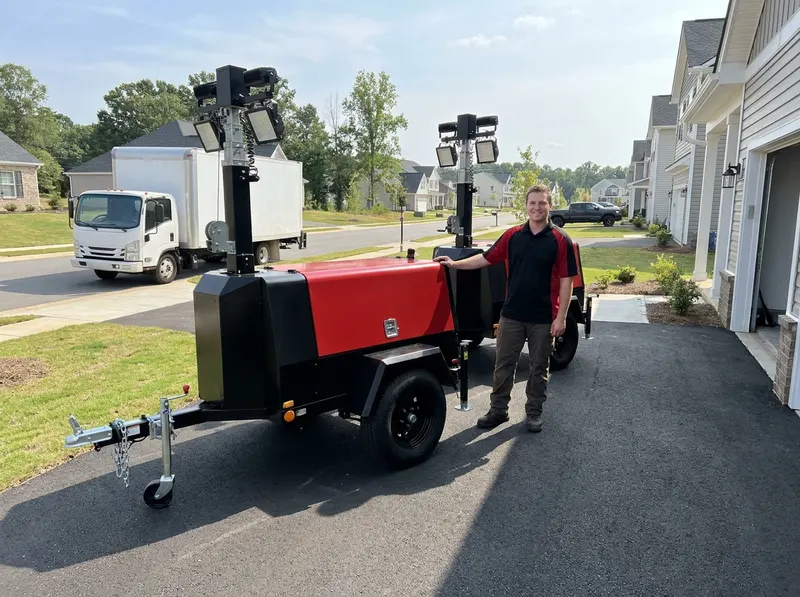
Portable jobsite lighting addresses critical visibility and safety requirements when daylight runs out on tight construction schedules. A standard mobile light tower integrates a compact diesel engine, an electric generator, and a 360-degree rotating telescoping mast that secures four fixtures up to 30 feet in the air. For contractors handling flatwork pours near Riverwalk or utility installations throughout Oakwood Acres, a four-lamp LED plant supplies approximately 150,000 to 220,000 lumens, covering an active working area of 5 to 7 acres. The trade-off between LED and traditional metal-halide configurations centers on fuel consumption versus beam penetration: LED systems draw roughly 60% less diesel and offer instant restrike without cooldown delays, whereas metal-halide fixtures deliver broader ambient wash at slightly higher hourly operating costs.
Site geometry directly determines unit placement and quantity. If work occurs on private residential property along Meadow Lakes or Sunset Point, single-tower deployments require level, stable terrain capable of supporting a 1,800-to-2,400-pound footprint with four outriggers extended. Wind-load ratings mandate anchoring or lowering masts when gusts exceed 50 to 65 mph, a vital precaution along open corridors near Catawba River Park or Giordana Velodrome. A single towable tower replaces multiple scattered stringer lights, eliminating trip hazards from extension cords while providing independent 120V auxiliary power on-board to run small power tools and battery chargers without an external generator.
Delivery and operations proceed through three clear steps. First, our drivers position the trailer in an unobstructed zone clear of overhead utility lines, maintaining at least 10 feet of radial clearance from power drops common in older tree-lined neighborhoods like Winthrop Heights or Ebenezer. Second, the ground crew deploys the three-point or four-point outrigger stabilization jacks, checks the dual bubble levels, and drives the ground rod into firm earth. Third, the mast extends via manual winch or electric actuator, orienting the individual lamp housings toward the designated work pad to prevent spillover glare into adjacent residential properties. Every unit is dispatched with verified fluid levels, though project managers remain responsible for daily fuel management and local municipal noise compliance rules.
Every job gets a firm, written price after a free on-site visit.
Tell us about your light towers job in Rock Hill and we'll send a clear, written quote, usually the same day.
 DumpReady Dumpster Rental