Pouring, cutting, or breaking slab foundations demands specific power units scaled directly to the job footprint. A utility trench cut through an existing garage slab in Ebenezer requires a diamond-blade push saw with…
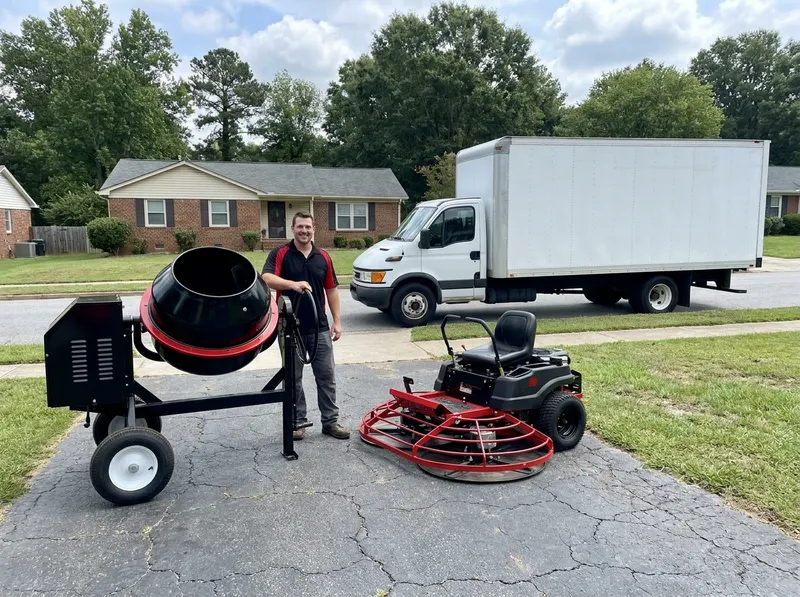
Pouring, cutting, or breaking slab foundations demands specific power units scaled directly to the job footprint. A utility trench cut through an existing garage slab in Ebenezer requires a diamond-blade push saw with integrated water delivery to suppress silica dust, whereas breaking out a frost-heaved patio in Winthrop Heights calls for a 60-pound pneumatic or electric breaker. Selecting an undersized electric hammer for slab demolition greater than 4 inches thick results in tool overheating and operator fatigue, while reserving an industrial ride-on saw for a modest walkway tear-out creates unnecessary transport and clearance bottlenecks on residential properties. Equipment arrives mounted on transport skids or rolling dollies to ensure clean, driveway-safe drops that preserve finished concrete and residential asphalt surfaces across neighborhoods like Riverwalk and Rollingwoods.
The logistical trade-off between equipment categories centers on production speed versus power supply access. Towable drum mixers handle 2 to 3 bags of 80-pound dry mix per cycle, making them ideal for fence posts or small slab pours along Harding Woods where ready-mix transit trucks cannot justify the minimum barrel fee. However, these units require dedicated 20-amp circuits or small portable generators when operating beyond standard 50-foot extension cord runs. For base preparation near low-lying subgrades around Meadow Lakes or Sunset Point, forward-plate compactors deliver 3,000 to 4,000 pounds of centrifugal force, ensuring crushed stone beds reach the 95 percent Standard Proctor compaction required to prevent future slab cracking under vehicle weight.
Concrete equipment rental functions strictly as tool and machinery deployment; it does not include professional field labor or post-demolition rubble removal. Operators must supply their own hearing protection, eye shields, and respirators rated for respirable crystalline silica under OSHA standard 29 CFR 1926.1153. Staging areas must feature level ground with clear access for utility trailers or flatbed delivery trucks. For jobs bordering municipal easements near Winthrop University or York County thoroughfares like Cherry Road, deliveries occur curbside or directly onto private driveways using protective ground boards to prevent point-load cracking.
Every job gets a firm, written price after a free on-site visit.
Tell us about your concrete equipment job in Rock Hill and we'll send a clear, written quote, usually the same day.
 DumpReady Dumpster Rental